




Spider Vein Treatment in Singapore – Causes, Dilated Blood Vessels & Laser Removal
What Are Spider Veins (Telangiectasia)?
Spider veins, medically known as telangiectasia, are small, dilated blood vessels that become visible near the surface of the skin. They often appear as fine red, blue or purple lines, sometimes forming branching or web-like patterns.
Dilated facial veins, also commonly described as facial spider veins, broken capillaries or visible blood vessels, frequently develop around the nose, cheeks and other areas of the face. Spider veins can also appear on the legs and other parts of the body.
Although spider veins are usually harmless, they may become more noticeable over time and contribute to persistent facial redness.

What Causes Spider Veins?
Several factors can contribute to the development of dilated blood vessels and facial spider veins, including:
Genetics: A family history of spider veins may increase susceptibility.
Ageing: Changes in the skin and blood vessel structures can make superficial vessels more visible.
Sun Exposure: Chronic ultraviolet (UV) exposure can damage the skin and contribute to facial telangiectasia.
Hormonal Changes: Pregnancy and hormonal influences may contribute to spider vein formation, particularly on the legs.
Prolonged Standing or Sitting: Increased venous pressure may contribute to spider veins on the lower limbs.
Skin Conditions: Rosacea and certain connective tissue disorders may cause persistent facial redness and visible blood vessels.
Corticosteroid Use: Prolonged or inappropriate use of potent topical corticosteroids can contribute to skin thinning and visible superficial vessels.
What Is the Difference Between Spider Veins and Varicose Veins?
Although spider veins and varicose veins both involve visible blood vessels, they differ in size, appearance and underlying causes.
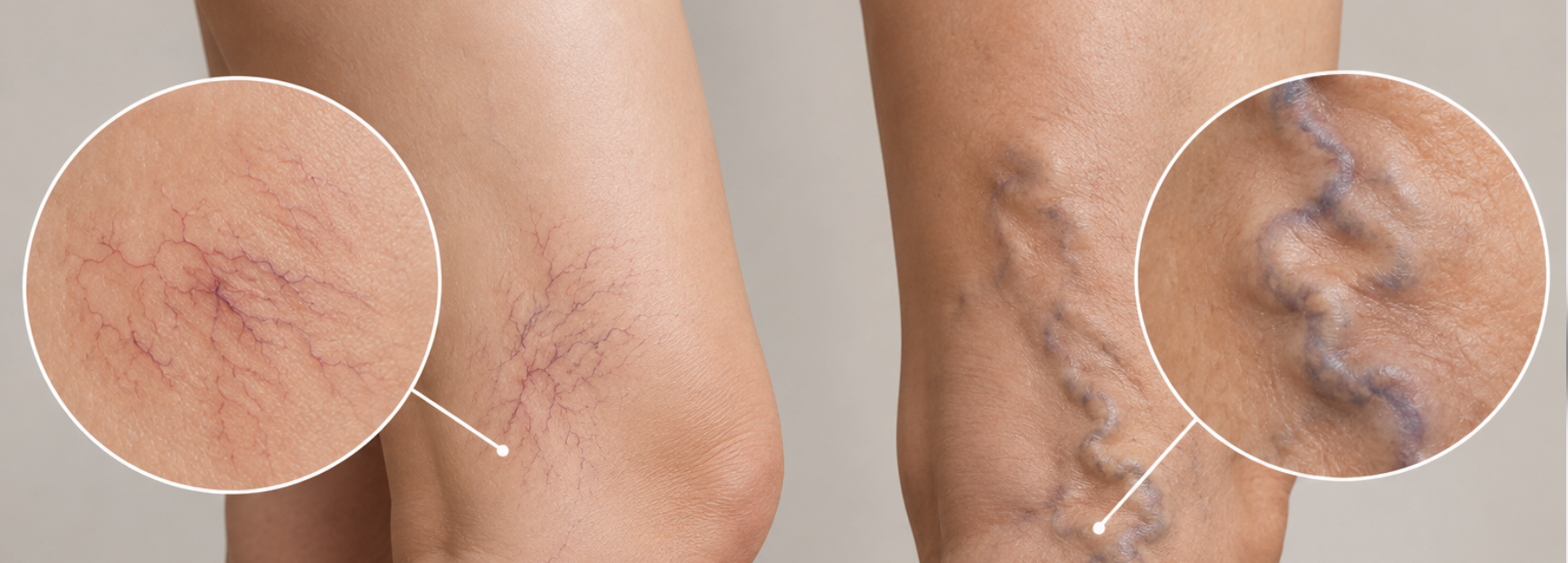
Spider Veins
Varicose veins on the other hand are large, swollen veins that appear on the surface of the skin. They often have a bulging or twisted appearance found on legs or feet. Generally, varicose veins are caused by weakened or damaged valves in the veins which can lead to blood pooling and increased pressure in the veins which leads them to enlarged, twisted, leading to discomfort, pain and/or even aching.
Apart from the difference in appearance and size, varicose veins are usually found on the legs or the feet and can be uncomfortable whereas spider veins are usually more a cosmetic concern.
Varicose Veins
Varicose veins on the other hand are large, swollen veins that appear on the surface of the skin. They often have a bulging or twisted appearance found on legs or feet. Generally, varicose veins are caused by weakened or damaged valves in the veins which can lead to blood pooling and increased pressure in the veins which leads them to enlarged, twisted, leading to discomfort, pain and/or even aching.
Apart from the difference in appearance and size, varicose veins are usually found on the legs or the feet and can be uncomfortable whereas spider veins are usually more a cosmetic concern.
Laser Treatment for Spider Veins & Dilated Facial Blood Vessels
Spider veins and dilated facial blood vessels may gradually become more visible, particularly around the nose, cheeks and other areas of the face.
For selected facial vascular concerns, vascular laser treatment may help reduce visible blood vessels, broken capillaries and persistent facial redness.
How Does the 577 nm Yellow Laser Treat Spider Veins?
At ENSOUL Medical Clinic, our doctors, Dr Kenneth Thean, Dr Chiam CT and Dr Daniel Toh, use the 577 nm Yellow Laser for selected facial vascular concerns.
The 577 nm wavelength targets haemoglobin, the oxygen-carrying pigment within red blood cells. When haemoglobin absorbs the laser energy, it generates controlled heat within the targeted blood vessels.
This thermal effect can damage the vessel walls, allowing the treated vessels to gradually become less visible as the body clears the affected tissue.
By selecting appropriate laser wavelengths and treatment parameters, doctors can target superficial dilated vessels while limiting unnecessary effects on the surrounding skin.
Can Vascular Lasers Reduce Facial Redness?
When multiple tiny blood vessels become dilated across the face, they can contribute to persistent redness, visible capillaries and a flushed appearance.
The Yellow Laser may help reduce the visibility of selected superficial vessels, including those associated with certain forms of facial telangiectasia and rosacea-related redness.
Doctors may target individual vessels or treat a broader area, depending on the distribution of the redness and the underlying skin condition.
What to Expect After Spider Vein Laser Treatment
Treatment of a small facial area may take approximately 5 to 15 minutes, although the duration varies depending on the number, size and location of the vessels.
Most patients can resume normal daily activities shortly afterwards. However, temporary redness, warmth, mild swelling or changes in skin pigmentation may occur.
Some vessels may require multiple sessions, and new dilated vessels can develop over time.
Laser treatment is not suitable for every type of visible vein. Larger leg veins or suspected varicose veins may require vascular assessment and different treatment approaches.