




Trying to get rid of lumpy and uneven skin on your tummy, thighs or buttocks? You will certainly benefit from proper cellulite removal. Before you consult Google for the most effective cellulite treatments or reduction that are available in Singapore, read on to find out more about the causation and treatment options such as cellulite laser reduction.
What is Cellulite? Causes & Treatment Options in Singapore
Cellulite treatment in Singapore aims to improve the dimpled, lumpy and uneven skin texture commonly seen on the thighs, buttocks, hips and abdomen. Often described as having an orange-peel appearance, cellulite is a common and harmless skin condition that can affect individuals regardless of body weight or fitness level.
Cellulite develops due to the interaction between subcutaneous fat, fibrous connective tissue and the overlying skin. Beneath the skin, fibrous connective tissue bands, known as fibrous septae, anchor the skin to deeper structures.
When underlying fat tissue pushes upwards while these fibrous bands pull certain areas of the skin downwards, it creates the characteristic dimples and uneven skin texture associated with cellulite.
Although cellulite can appear in different areas of the body, it is most commonly found on the thighs, buttocks, hips and abdomen.

Why Is Cellulite More Common in Women?
Although cellulite can affect both men and women, it is significantly more common in women due to differences in fat distribution, connective tissue structure and hormonal influences. In women, the fibrous septae are more commonly arranged in a relatively vertical pattern, allowing fat tissue to protrude between the connective tissue bands and create visible dimpling.
In men, these connective tissue structures tend to form a more interwoven, crisscross arrangement, which provides greater structural support and makes cellulite less common.
Other contributing factors include genetics, ageing, hormonal changes, skin thickness and reduced skin elasticity.
Importantly, cellulite is not simply a problem of excess body fat. Even individuals who are slim or physically active may develop cellulite, which is why weight loss alone may not eliminate cellulite dimples.
Why Does Cellulite Become More Noticeable with Age?
As we age, collagen production declines, skin elasticity decreases and the connective tissue structures beneath the skin undergo changes. The skin gradually becomes thinner and less firm, making underlying fat deposits and cellulite dimples more visible.
Changes in the fibrous septae, subcutaneous fat distribution and skin structure can further contribute to the characteristic lumpy, uneven or orange-peel skin texture. Alterations in microcirculation and fluid balance may also play a role, although their contribution to cellulite development is not fully understood.
Can Weight Loss Get Rid of Cellulite?
A common misconception is that losing weight will automatically eliminate cellulite. While weight loss may reduce overall body fat and improve the appearance of cellulite in some individuals, it does not necessarily address the fibrous connective tissue bands responsible for skin dimpling.
This is because cellulite is not simply caused by excess fat. It involves structural changes in the skin, connective tissue and underlying subcutaneous fat.
As a result, cellulite can be challenging to treat, and no single treatment can guarantee its complete removal.
Depending on the severity of cellulite, skin laxity and underlying tissue structure, a combination of non-surgical cellulite reduction technologies may be considered to help improve skin firmness, reduce the appearance of dimpling and achieve a smoother, more even skin texture.
Types of Cellulite
There are three grades of cellulite;

Grade I
The skin becomes pale and when pinched, acquires a sagging tone with an “orange-peel” appearance.

Grade II
Visible lumps and bumps are evident while standing up but disappear when lying down horizontally.
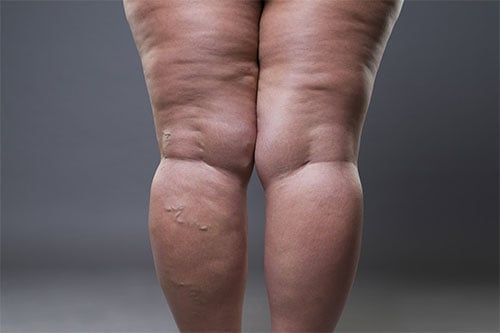
Grade III
The skin exhibits an unmistakably dimpled and wavy appearance, also commonly known as the “mattress” skin tone.
Cellulite Treatment in Singapore – Non-Surgical Technologies for Smoother Skin
Cellulite Deep Heat Therapy involves a combination of non-surgical technologies designed to improve the appearance of dimpled, lumpy and uneven skin, commonly known as orange-peel skin.
Because cellulite involves changes in the underlying fat, fibrous connective tissue and skin structure, cellulite reduction may require a combination of treatment modalities rather than relying on a single technology.
Different energy-based technologies, including laser thermolysis, radiofrequency (RF), microwave energy, acoustic shockwave therapy and RF microneedling, work through different mechanisms to address factors contributing to cellulite and uneven skin texture.

How Does Cellulite Deep Heat Therapy Work?
A combined cellulite treatment approach focuses on three main components:
Fibrous Connective Tissue (Septa): Fibrous bands that tether the skin to deeper structures and contribute to visible cellulite dimples.
Subcutaneous Fat: Underlying fat deposits that push against the skin and contribute to uneven body contours.
Skin Quality & Elasticity: Reduced collagen support, skin thinning and laxity that make cellulite more noticeable.
Depending on the technology used, controlled thermal or mechanical energy may help stimulate collagen remodelling, improve skin firmness, influence local tissue circulation and reduce selected subcutaneous fat deposits. These effects may contribute to smoother skin texture and improved body contours.
Non-Surgical Technologies for Cellulite Reduction
1. Laser Thermolysis – Targeting Subcutaneous Fat
As the treated fat layer decreases, localised fat deposits may become less prominent, contributing to improved body contours. The thermal energy may also support collagen remodelling and mild skin tightening, helping to improve skin firmness and elasticity.
However, cellulite involves more than excess fat. In moderate to severe cases, including Grade 3 cellulite, fibrous connective tissue bands may create deeper skin dimpling that fat reduction alone cannot adequately address.
For this reason, laser thermolysis may be combined with other technologies that target different aspects of cellulite:

2. Monopolar Radiofrequency (RF) – Fat Reduction & Skin Firming
Delivers controlled radiofrequency energy to heat underlying tissues. Depending on the technology, RF may help reduce localised subcutaneous fat while supporting collagen remodelling and improving skin firmness.

3. Microwave Technology – Fat Reduction & Skin Tightening
Uses controlled microwave energy to selectively heat subcutaneous fat tissue. The thermal effects may help reduce localised fat deposits and stimulate collagen remodelling, contributing to improved skin firmness and smoother contours.
4. Acoustic Shockwave Therapy – Cellulite Texture Improvement
Uses mechanical pressure waves to stimulate tissue responses that may improve the appearance of cellulite dimples and uneven skin texture.
5. Radiofrequency Microneedling – Collagen Remodelling & Skin Quality
Combines microneedling with controlled radiofrequency energy delivered into the dermis. This stimulates collagen remodelling and may improve skin firmness, elasticity and texture, particularly when skin laxity contributes to the appearance of cellulite.
Why Combine Different Cellulite Treatments?
Cellulite is not simply a problem of excess fat. It involves the interaction between fibrous connective tissue, subcutaneous fat and the overlying skin.
While fat-reduction technologies can help decrease localised fat deposits, they may not fully address the fibrous bands responsible for cellulite dimpling. Similarly, skin-tightening treatments may improve skin firmness without directly reducing underlying fat.
For this reason, a combination of medical-grade energy-based technologies may be used to address multiple contributing factors, including localised fat deposits, reduced skin elasticity and uneven skin texture.
Although no single non-surgical treatment can guarantee complete cellulite removal, a combined approach may help visibly reduce cellulite dimpling and improve skin smoothness and firmness. Results vary depending on cellulite severity, tissue structure and individual response.