




Droopy Eyelid Treatment in Singapore | Non-Surgical Eyelid Lifting
Droopy eyelids can affect the appearance of your eyes and overall facial expression. When the upper eyelid itself sits lower than normal, doctors refer to this condition as ptosis. However, loose or excess upper eyelid skin can also create a drooping appearance without true ptosis.
The shape and definition of the upper eyelid crease play an important role in the appearance of your eyes and face. As we age, the upper eyelid skin gradually loses collagen and elasticity, causing it to loosen and sag. This can make the double eyelid crease appear smaller or less visible, resulting in hooded or droopy-looking eyelids.
Droopy upper eyelids can make your eyes appear smaller, tired, sleepy or older than your actual age. Depending on the underlying cause, selected non-surgical eyelid tightening treatments may help improve mild upper eyelid skin laxity and restore a firmer, more defined appearance.
What Causes Eyelid to Droop?
Several factors can contribute to droopy eyelids, sagging upper eyelid skin and ptosis. Identifying the underlying cause helps determine the most suitable treatment.
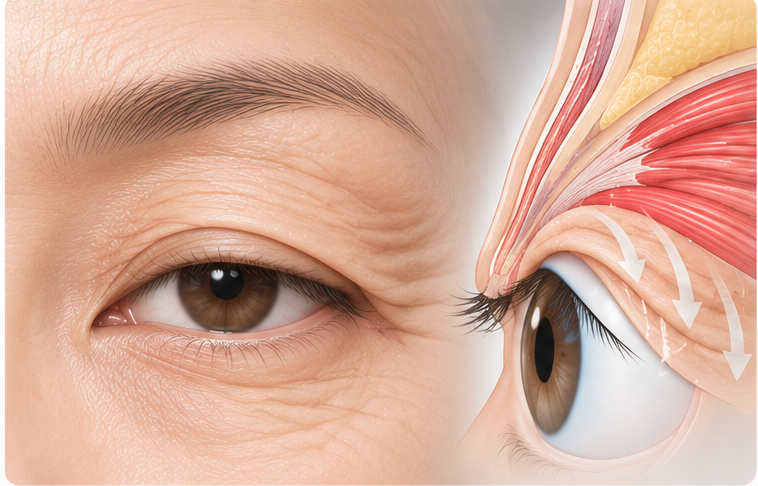
Ageing
As we age, the skin around our eyes gradually loses collagen and elastin, reducing skin firmness and elasticity. The supporting structures responsible for lifting the upper eyelids may also weaken or stretch over time, causing the eyelids to droop.
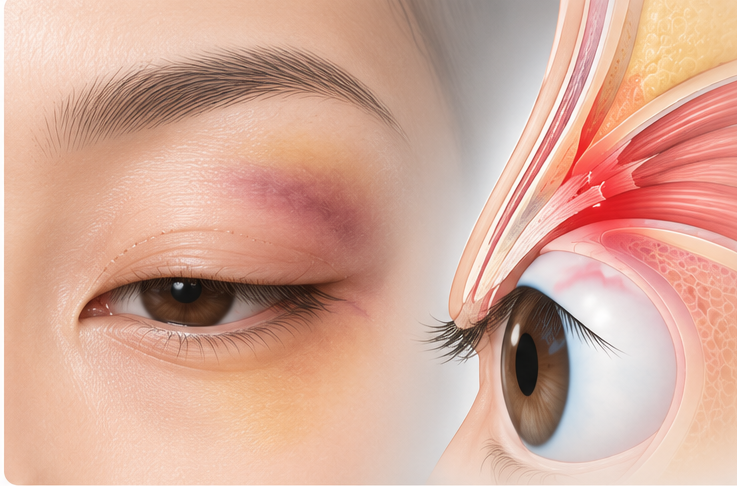
Trauma
Injuries to the eye region can damage or weaken the levator muscle or levator aponeurosis, which helps lift the upper eyelid. This can result in upper eyelid ptosis, causing one or both eyelids to droop.
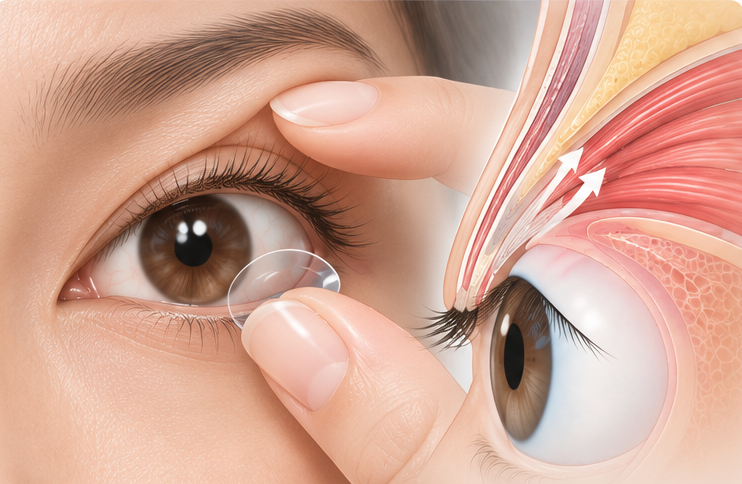
Prolonged Contact Lens Use
Prolonged contact lens use, particularly repeated pulling or stretching of the upper eyelid during insertion and removal, may gradually stretch or weaken the levator aponeurosis. This can contribute to acquired ptosis in some individuals.
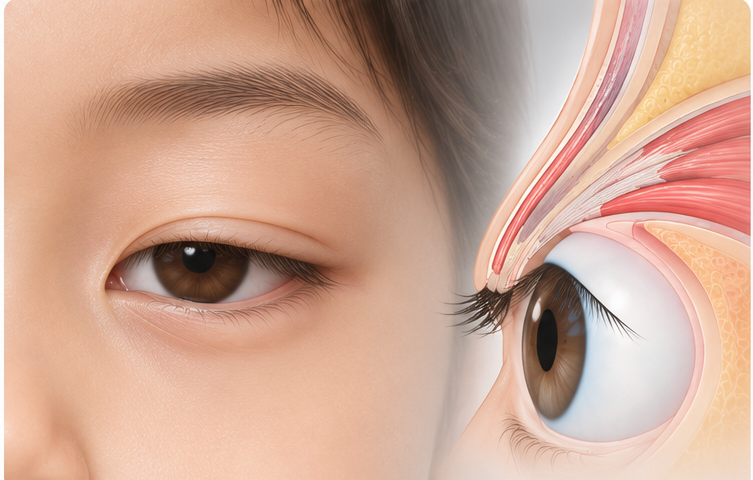
Congenital Causes
Some individuals are born with droopy eyelids, a condition known as congenital ptosis. This commonly occurs when the levator muscle responsible for lifting the upper eyelid does not develop or function normally.
Traditionally, surgery has been the main treatment for significant droopy eyelids. However, advancements in medical technology have introduced non-surgical eyelid tightening options for patients with mild upper eyelid skin laxity who prefer to avoid the incisions, stitches and downtime associated with surgery.
These non-surgical treatments primarily address loose eyelid skin rather than true ptosis caused by problems with the eyelid-lifting muscles or supporting structures.
Non-Surgical Treatments for Droopy Eyelids in Singapore
The severity of droopy eyelids can range from mild to severe. Doctors assess the degree of skin laxity, eyelid drooping and underlying cause before recommending a suitable treatment.
Several droopy eyelid treatment options may help improve sagging upper eyelids, hooded eyes and less defined double eyelid creases without surgery.
At Ensoul Medical Clinic in Singapore, our doctors may recommend a combination of non-surgical treatments, including:
Collagen-Stimulating Laser Treatments – Stimulate collagen remodelling to improve mild upper eyelid skin laxity, fine lines and skin firmness.
Radiofrequency (RF) Skin Tightening – Uses controlled thermal energy to stimulate collagen production and improve loose skin around the brow and outer eye area.
High-Intensity Focused Ultrasound (HIFU) – Targets selected deeper supporting tissues around the brow and upper face to promote skin tightening and subtle lifting.
Depending on the patient's skin condition and degree of laxity, our doctors may combine suitable technologies to improve skin firmness, upper eyelid hooding and overall eye-area appearance.
However, non-surgical eyelid tightening cannot correct true ptosis caused by weakened eyelid-lifting structures. Patients with significant drooping may require specialist assessment. Sudden eyelid drooping, particularly with double vision, unequal pupils or severe headache, requires urgent medical attention.