




Stretch Mark Removal & Treatment in Singapore – Causes, Lasers & RF Microneedling
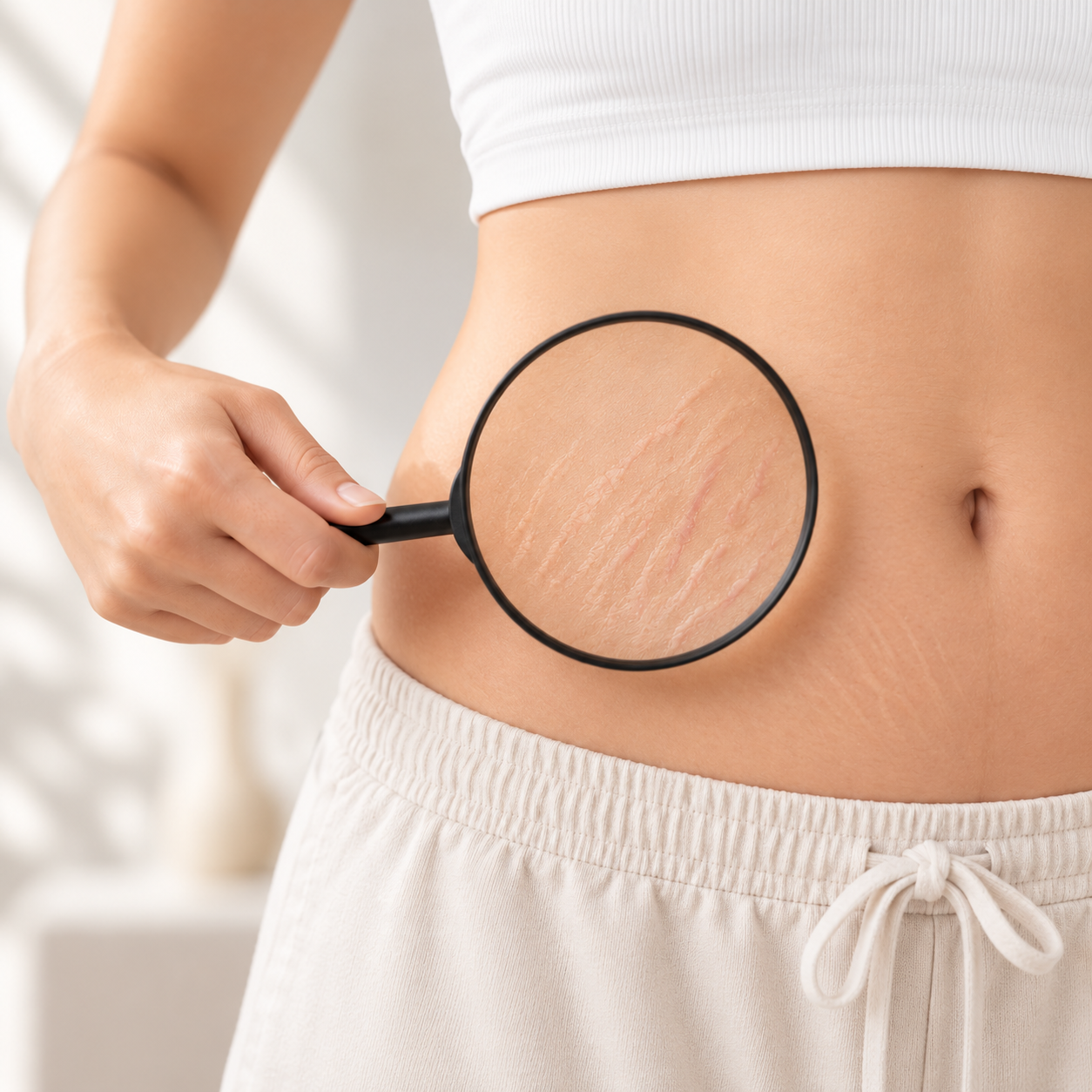
Stretch mark treatment in Singapore focuses on improving the appearance of stretch marks, also known as striae, which develop when the skin stretches or contracts rapidly. These marks commonly appear on the abdomen, thighs, hips, buttocks, breasts and upper arms. Stretch mark are a form of dermal scarring. Although they are harmless, they can create visible lines, changes in skin colour and uneven skin texture.
Various treatment options, including topical creams, fractional laser resurfacing and radiofrequency (RF) microneedling, may help reduce their appearance by supporting collagen remodelling and improving skin texture.
What Causes Stretch Marks?
A stretch mark develops when the skin undergoes rapid stretching or changes in tension that disrupt the normal structure of collagen and elastin within the dermis. Collagen provides structural support, while elastin allows the skin to stretch and return to its original shape. When these fibres become disrupted, the skin may develop narrow, linear scars known as stretch marks.
Hormonal changes, genetic predisposition and individual skin characteristics also influence the likelihood of developing stretch marks. Common causes include:
- Puberty: Rapid growth spurts can stretch the skin faster than its supporting structures can adapt.
- Pregnancy: Changes in abdominal size, skin tension and hormone levels can contribute to stretch marks.
- Rapid Weight Gain or Loss: Significant changes in body size may affect the skin's connective tissue.
- Hormonal Factors: Conditions associated with elevated corticosteroid levels or prolonged corticosteroid use may weaken dermal connective tissue and increase the risk of stretch marks.
Stretch marks may develop in individuals of different ages, body types and skin tones.
What Do Stretch Marks Look Like?
Stretch marks can appear in different colours, including red, pink, purple, reddish-brown, dark brown or white, depending on their stage of development and the individual's skin tone. Their appearance often changes as the affected skin matures.

Early Stretch Marks – Red or Purple (Striae Rubrae)
New stretch marks commonly appear as reddish, pink or purple linear bands. On darker skin, they may appear reddish-brown or darker than the surrounding skin. During this stage, the marks may feel slightly raised and can sometimes cause itching or mild irritation.
The reddish or purple colour is partly associated with vascular changes and inflammation in the affected skin. Early stretch marks may respond more readily to certain treatments, particularly those targeting vascular redness, although complete removal cannot be guaranteed.

Mature Stretch Marks – White or Depressed (Striae Albae)
As stretch marks mature, their colour gradually fades. They may become pale, white or lighter than the surrounding skin.
The affected areas can also develop a slightly depressed or wrinkled texture because of changes in the underlying dermal collagen and elastin.
Mature stretch marks are often more difficult to improve than newer marks. However, treatments that stimulate collagen remodelling may help improve their depth, texture and overall appearance.
What are Your Stretch Mark Removal Treatment Options in Singapore?
Stretch marks are a form of dermal scarring that cannot usually be completely removed. However, various treatments can help reduce their visibility, improve uneven skin texture and stimulate collagen remodelling, making them less noticeable over time.
Treatment options include topical creams, medical lasers and radiofrequency (RF) technologies. The most suitable approach depends on whether the stretch marks are new or mature, their depth and severity, and the individual's skin type.
Topical Creams – Improving Early Stretch Marks
Certain prescription topical treatments, such as tretinoin (a vitamin A derivative), have been studied for their potential to improve early red or purple stretch marks by supporting collagen production and skin renewal. However, evidence remains limited, particularly for mature white stretch marks.
Over-the-counter stretch mark creams, scar gels and oils containing ingredients such as hyaluronic acid, vitamin E and centella asiatica are commonly used to moisturise the skin. While some formulations may improve skin hydration and appearance, there is limited clinical evidence that they can significantly reduce established stretch marks.
As stretch marks involve structural changes in the deeper layers of the skin, topical products generally have limited ability to reverse the underlying scarring.
The suitability and effectiveness of topical treatments depend on individual skin characteristics and should be assessed by a qualified medical professional.
Medical Lasers – Stretch Mark Reduction & Collagen Remodelling
Medical laser treatments may help reduce the appearance of stretch marks by targeting skin discolouration, uneven texture and changes in dermal collagen.
Different laser wavelengths can be selected depending on whether the stretch marks are new or mature:
- Fractional Erbium Laser: Creates controlled microscopic treatment zones to stimulate skin renewal and collagen remodelling. This may help improve mature white stretch marks, depressed scars and uneven skin texture.
- Vascular Yellow-Wavelength Lasers & Long-Pulsed Nd Yag Lasers: Target haemoglobin within blood vessels to help reduce the redness associated with early red or purple stretch marks.
A combination of laser wavelengths may be considered to address different aspects of stretch mark scarring, depending on individual skin characteristics. Temporary redness, swelling and pigmentation changes may occur following laser treatment. More aggressive resurfacing treatments, particularly fractional CO₂ lasers, may involve greater downtime and a higher risk of post-inflammatory hyperpigmentation (PIH), especially in Asian and darker skin types. However, risks vary depending on the laser technology, treatment settings and individual skin response.
Radiofrequency (RF) Treatments – Improving Skin Texture & Elasticity
As stretch marks involve damage to collagen and elastin fibres, radiofrequency (RF) treatments may help improve their appearance by delivering controlled heat into the skin to stimulate collagen remodelling.
At Ensoul Medical Clinic, two RF approaches may be considered:
Fractional RF: Creates controlled thermal treatment zones to encourage collagen renewal, improving uneven skin texture and firmness.
RF Microneedling: Uses fine needles to deliver RF energy into deeper layers of the dermis, targeting depressed stretch marks and supporting structural remodelling.
Both treatments aim to reduce the visibility of stretch marks and improve skin texture, with treatment selection based on the depth and severity of the scarring.
Stretch Mark Removal in Ensoul Medical Clinic in Singapore
We have a wide repertoire of lasers and energy devices that we customize to treat stretch marks. As everyone’s skin is different, our doctor will require a detailed assessment in order to determine suitable treatment for you. Treatments such as medical lasers, radiofrequency to laser thermolysis can be standalone or in combination depending on the severity of the stretch marks.
As stretch marks occur when the skin is pulled by rapid growth or stretching, thus when it's overstretched, the normal production of collagen (where the major protein that makes up the connective tissue in the skin) is disrupted. In order to treat the stretch marks, we will need to restructure the damaged tissue. The treatments we use are painless and comfortable, it can help to boost cellular metabolism, regenerate cells and improve tone and elasticity of the skin and overall lighten the appearance of the stretch marks. The number of sessions required will be determined according to the condition of your skin.